◆ Work with me
The work starts where the demo stops.
I put AI into organisations that already have a business to run. The rules, the messy data and the people all come with it. Getting something adopted there is a different problem from getting it working, and it is the one I spend my time on.
There are five reasons people call me. You will usually need one of them. Sometimes they run in order.
◆ What you can bring me
Five starting points.
◆ 01 / getting value out
Getting value out of the AI you already bought
The licences went out months ago and nobody can say what changed.
Most organisations have bought the AI and not the change. The model is rarely the thing that is wrong. What is missing is that nobody redesigned the job around it, so the tool sits on top of a process built for people doing it by hand. I come in after the purchase and before the write-off.
What you get
- One honest page showing where the time and the money actually go
- Every activity tagged: remove it, automate it, assist it, or leave it alone
- Two or three things worth doing, and a written list of what we are not doing
- The redesigned process, the roles, and training that is about the job rather than the software
- A baseline taken before anything changes, and evidence afterwards in your own numbers
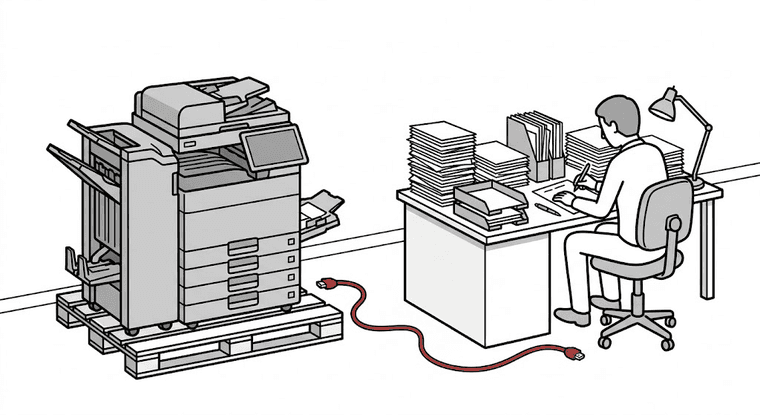
Best fit: a function that already has the tools, a fixed budget, and nothing yet to show for either.
Read the full picture →◆ 02 / what to build
Figuring out what to actually build
You have been told to "do something with AI" and nobody agrees what.
The hard part was never the model. It is choosing work worth doing at all, and saying out loud which ideas will not survive contact with your data or your people. I come in before anything gets built.
What you get
- Working out where the bottlenecks are, with the people actually doing the job
- Each candidate weighed on what it is worth and what it will cost, reasoning shown
- The ones I would kill, and why
- A shortlist you can take to a budget conversation

Best fit: a leadership team under pressure to act, with no shortlist yet.
Read the full picture →◆ 03 / data for AI
Fixing your data before the model reads it
The model is fine. Your data is not ready for it.
This is the part most people skip and most people get stuck on. AI does not sit on a tidy warehouse any more. It reaches into documents, mailboxes and systems nobody ever curated for it. Getting that estate into a state where a model can read it safely is most of the real work, and it is where I spend most of my time.
What you get
- An honest assessment of what your AI can currently see, and what it should not
- Permissions and oversharing surfaced before an assistant makes them obvious
- Unstructured content made retrievable: structure, extraction, quality, metadata
- Automated checks so the pipelines do not quietly degrade
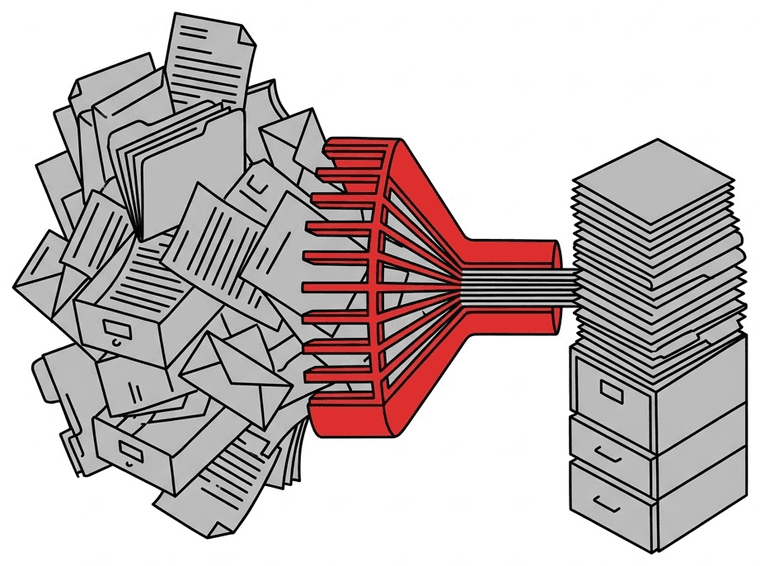
Best fit: an organisation whose AI keeps returning the wrong document.
Read the full picture →◆ 04 / build it
Building it once the idea is real
The demo worked. It died on the way to production.
I build with a toolset chosen for your constraints rather than for whatever is fashionable this quarter. Retrieval, agents, evaluation, monitoring. I care most about the unglamorous half: what happens after it ships.
What you get
- The whole path, from the first script to something running in production
- Logging, guardrails and evaluation set up before launch
- An honest account of what it costs to run and where it breaks
- Your team able to maintain it without me
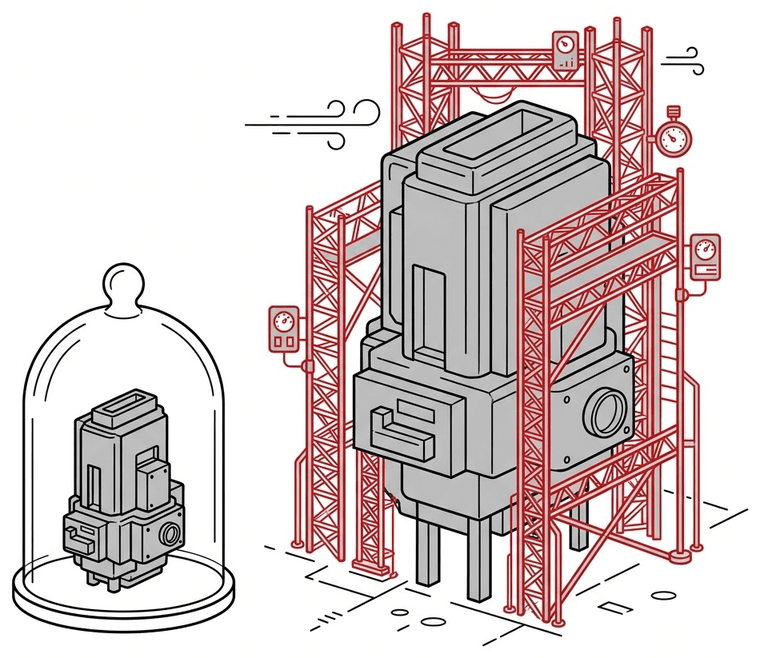
Best fit: a pilot that works in a demo and has to survive real users.
The AI engineering pipeline, in full →◆ 05 / govern it
Governing AI inside a corporate organisation
People are creating agents faster than anyone can approve them.
Governance is where most enterprise AI quietly goes wrong. Who is allowed to build an agent, and who is only allowed to use one. What leaves your compliance boundary the moment someone turns on web grounding. Which oversharing an assistant is about to make visible. These are not philosophical questions. They are configuration settings and access policies, and they have real answers.
What you get
- Separating who can create agents from who can use them
- Sharing and approval controls that people will actually follow
- Where your data goes: residency, egress, and the boundaries a vendor will not draw for you
- A lifecycle for agents, including the ones that should be stopped
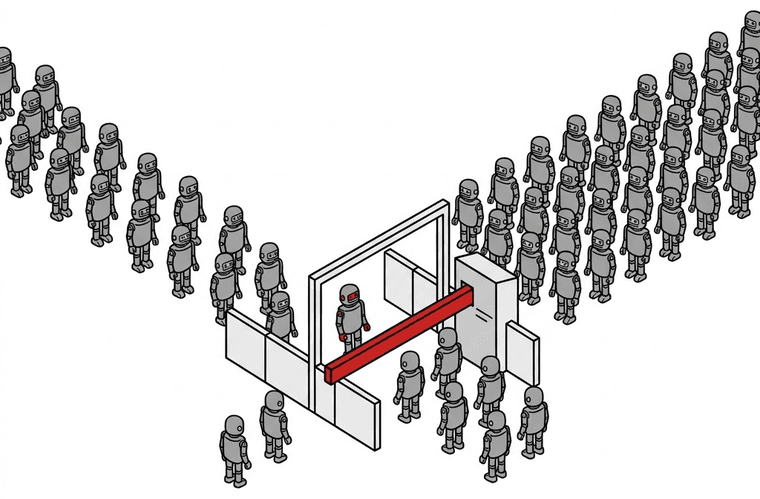
Best fit: heavily regulated or public-sector teams rolling out at scale.
Read the full picture →◆ 06 / teach your people
Teaching people AI, from the ground up
Your teams were handed the tools and never taught the thinking.
I teach assuming no prior knowledge and I never leave an acronym unexplained. Plain English first, the proper term second, so people pick up the real vocabulary without being made to feel stupid for not having it. Engineers who need to write working code, and leaders who need to ask better questions.
What you get
- Hands-on engineering training: Python and the GenAI stack, keyboard first
- Governance and risk sessions for leaders and approvers
- Certification preparation for the Microsoft AI tracks
- Materials your people keep after I leave
Best fit: a team that has the tools and is not getting value from them yet.
Read the full picture →◆ How it starts
Getting started.
Tell me what is actually on your desk. I will tell you whether I can help, what I think it really takes, and whether it is worth doing at all. If the project is a bad idea, or you do not need me, I will say so.
I work on my own. No bench to keep busy, no product to steer you towards. My bias is towards the smallest thing that proves the point, and towards leaving your team able to carry it without me.