OpenAI just gave away the part that actually matters
On 19 August 2026 OpenAI open-sourced the Codex harness. The announcement contains one sentence, without a heading, that settles two years of arguing about which model is best.
On 19 August 2026 OpenAI open-sourced the Codex harness. The announcement contains one sentence, without a heading, that settles two years of arguing about which model is best.
Most of the coverage will describe this as an SDK release. It is not really that.
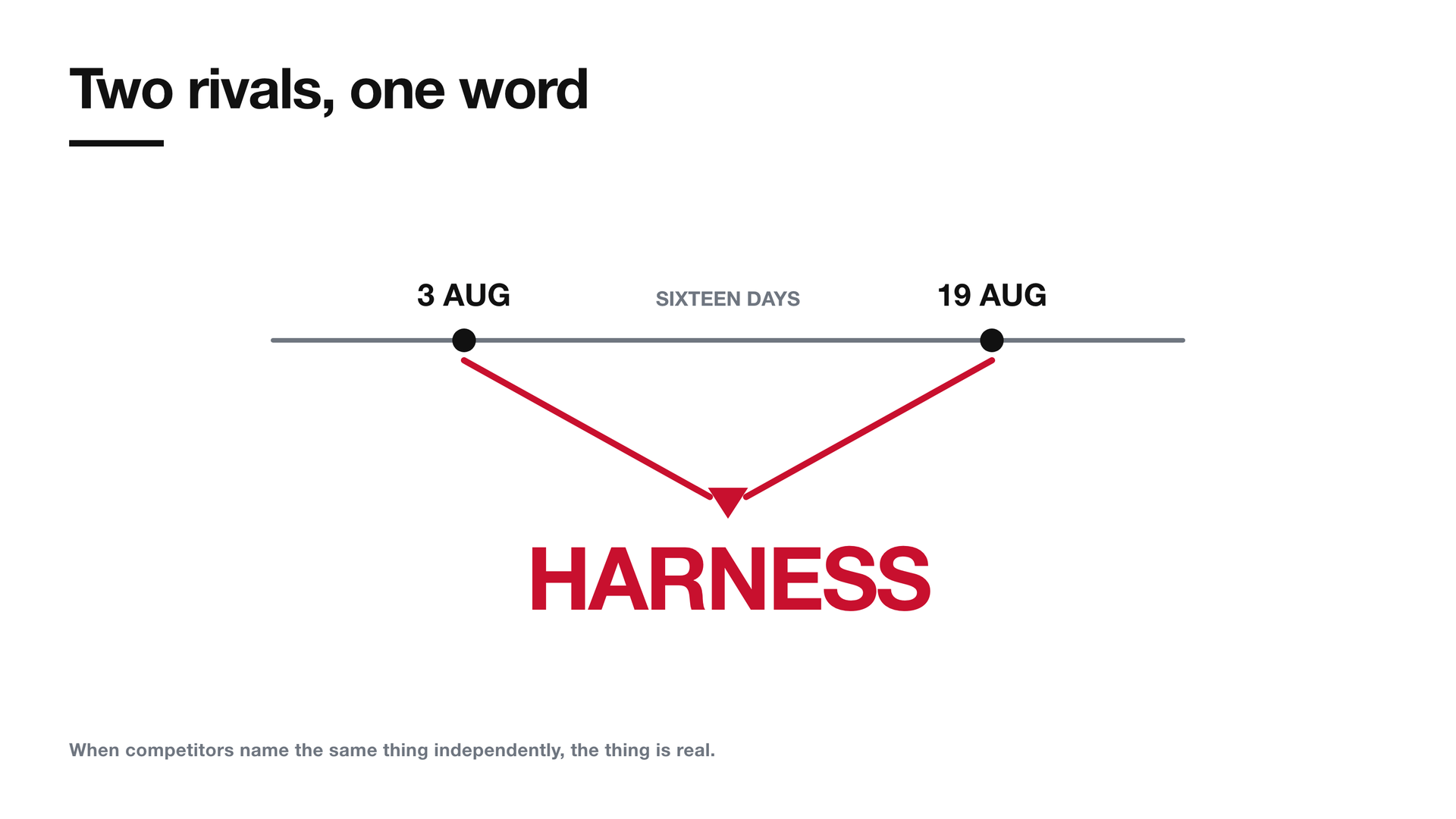
Sixteen days earlier, Microsoft had shipped the same idea under the same name. When two companies who agree on very little independently reach for the same word in the same month, the word is worth learning.
That word is harness, and this is what it means.
The number they published without a heading
Buried in the middle of the post, with no emphasis at all:
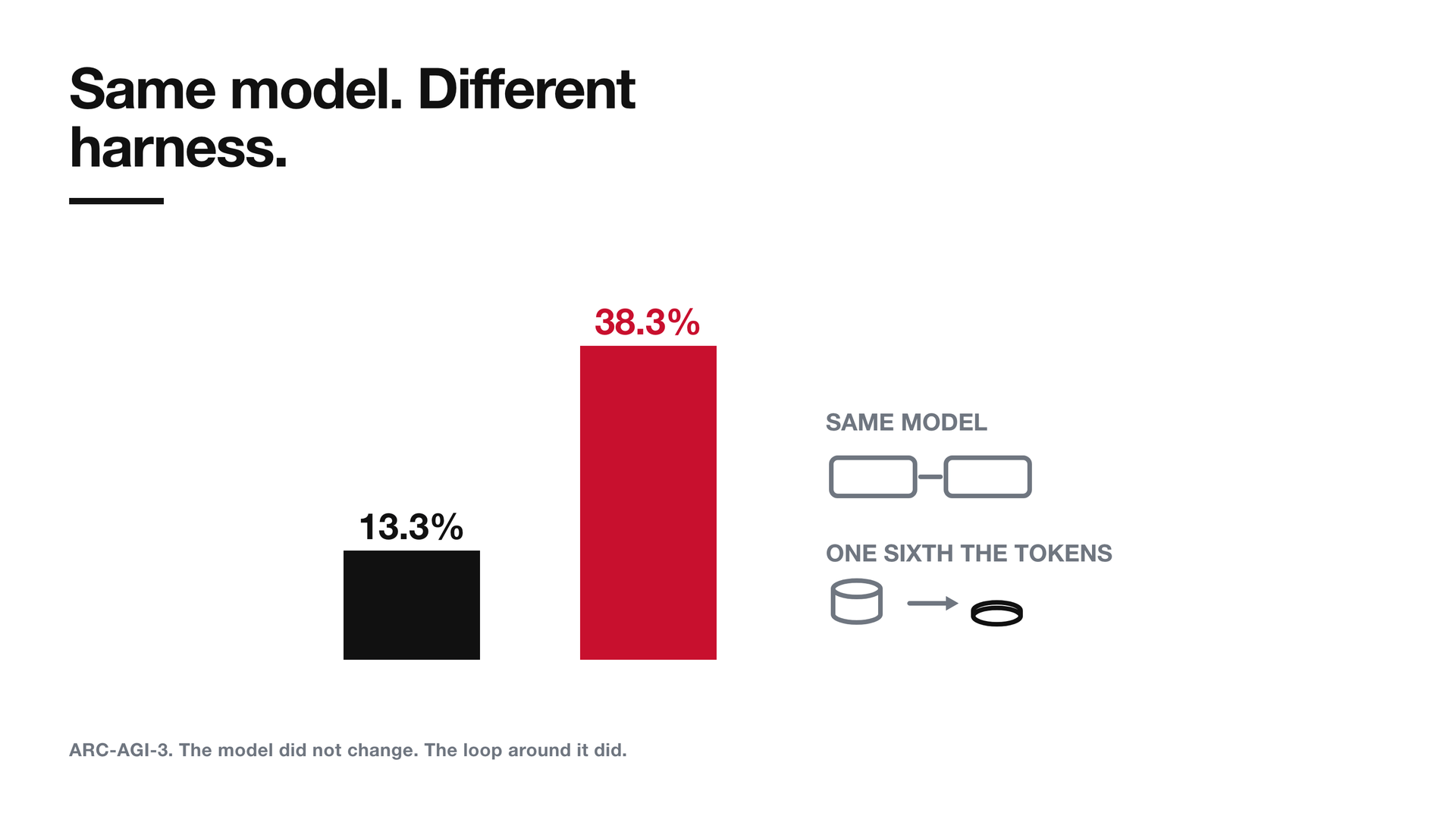
"Harness design can materially change results: on ARC-AGI-3, retained reasoning and context compaction raised GPT-5.6 Sol's score from 13.3% to 38.3% while reducing output tokens sixfold."
Read it twice.
The same model scored nearly three times higher. It used one sixth the output tokens getting there. Nothing about the model changed — not its size, not its version, not its training.
What changed was the software wrapped around it: how it held on to its own reasoning between steps, and how it compressed what it was carrying.
For two years the industry argued about which model was best. That argument turns out to be answerable in a footnote, and the answer is that it was frequently the wrong question. A team that switches models to fix a struggling agent is often paying more for a problem the model never caused.
What a harness actually is
Sketch the architecture of any agent you have built. You will draw the model. You will draw the tools, the knowledge sources, and a user somewhere on the left.
Now look at the gap in the middle. There is a piece of software living there that you almost certainly did not draw, because until this year it had no name.
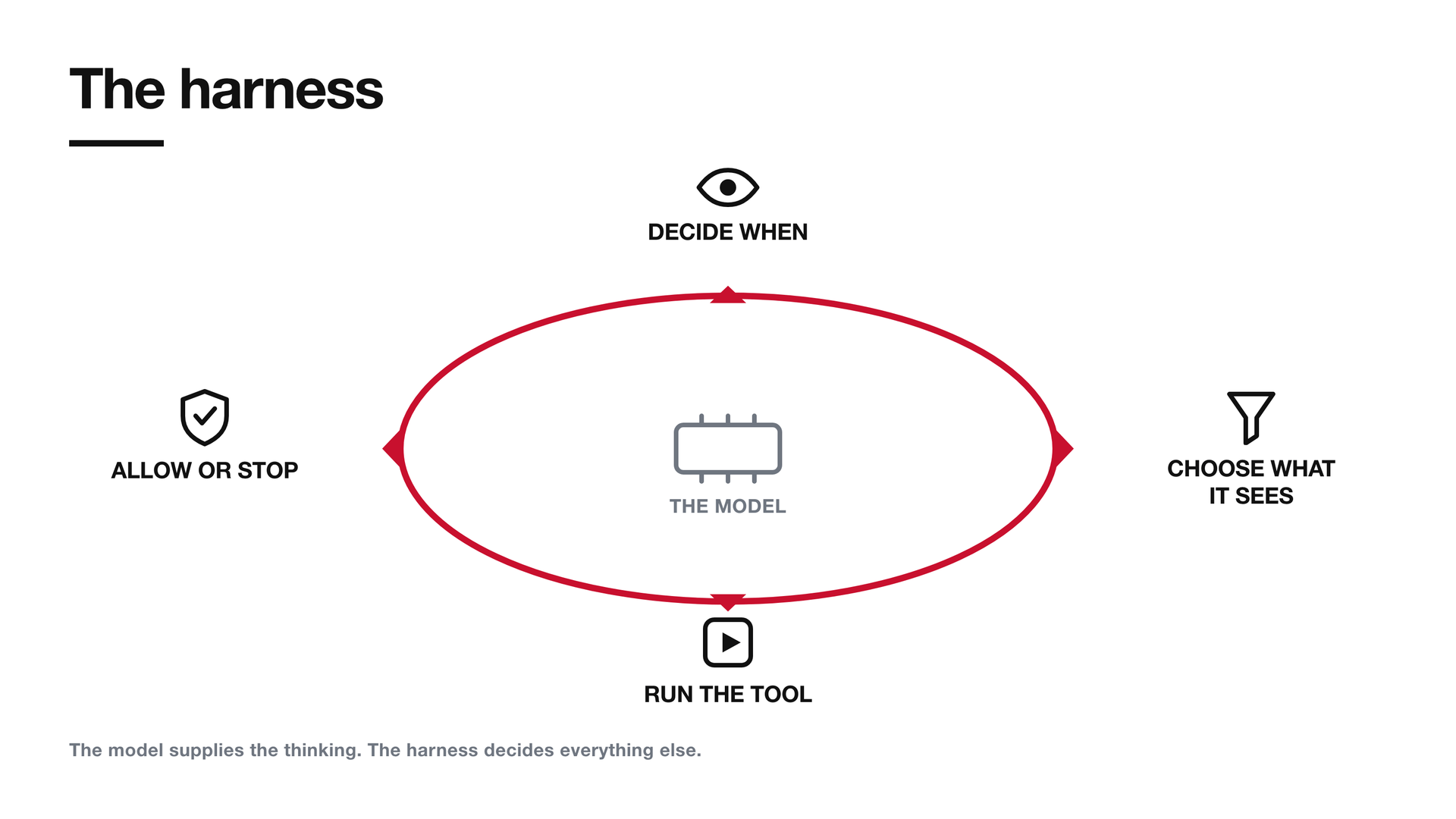
That piece decides when to call the model. It decides what to put in front of it — which instructions, which retrieved documents, how much of the conversation so far. It reads what comes back and works out whether that was an answer or an instruction to use a tool. It runs the tool, takes the result, decides what happens next, and goes round again.
OpenAI names it in one line:
"That surrounding execution system is the harness."
And describes what theirs does: it "helps models gather context, reason through tasks, use tools, operate within configured boundaries, request approval, and carry work forward."
In plain English: the model supplies the thinking. The harness decides when thinking is needed, what the model gets to see, and what is allowed to happen as a result. It is the difference between an engine and a car.
Two rivals, one word, sixteen days apart
3 August 2026. Microsoft makes a new engine generally available underneath Copilot Studio, calls it a harness, and ships three of them. Which one you choose decides what your agent can do and how you are billed.
19 August 2026. OpenAI publishes Codex as a platform: build on the open agent harness.
Same word. Same layer. Same claim about where the difficulty lives.
This matters more than a naming coincidence. When one vendor invents a term it is usually marketing. When a competitor independently reaches for the same term to describe the same layer, something has shifted in how the work is actually understood.
What shifted is this. Building an agent used to mean choosing a model and writing a good prompt. That has quietly stopped being true. The model is now a component you buy. The prompt is a file you version. The engineering — and the failures — moved into the loop.
What they opened, and what they kept
The most honest sentence in the announcement is near the end and easy to skim:
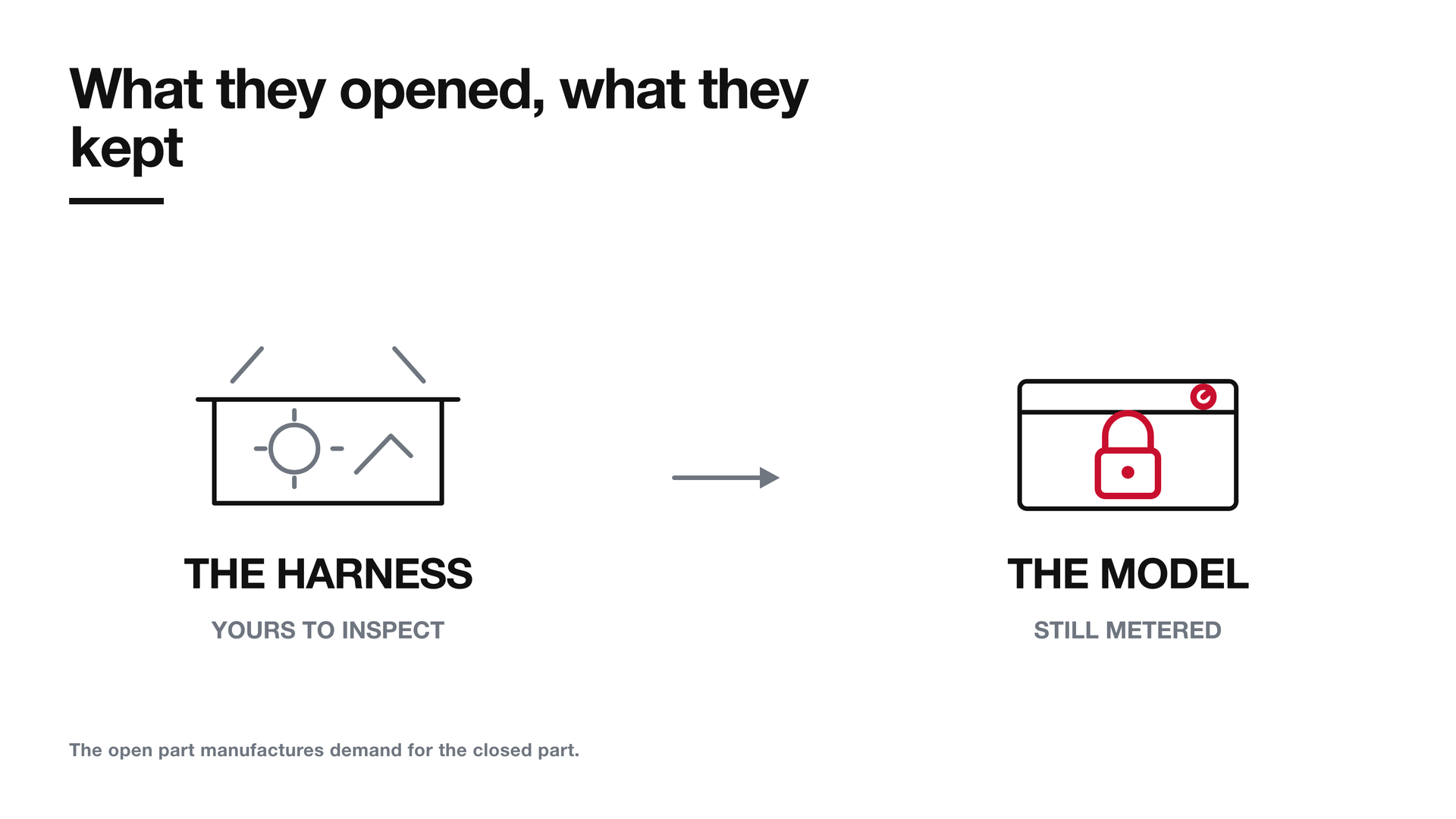
"The open-source layer is the harness and integration surface; model access and managed services remain separate."
So the harness is open. You can read it, run it, change it, build your product on top of it. The model is not. That still comes from OpenAI, metered, on their terms.
This is not a criticism, and it is worth understanding rather than resenting. Giving the harness away makes it cheaper for thousands of teams to put an agent inside their own product. Every one of those products then needs a model. The open part manufactures demand for the closed part.
There is a genuine benefit on your side of that bargain. Because the harness is open source you can, in their words, "inspect the layer between your application and the model, understand how it behaves, and adapt the integration to fit your product."
If you have ever had to explain to a risk committee what an AI system does between the question and the answer, an inspectable runtime is worth a great deal. It is the difference between "we trust the vendor" and "here is the code path".
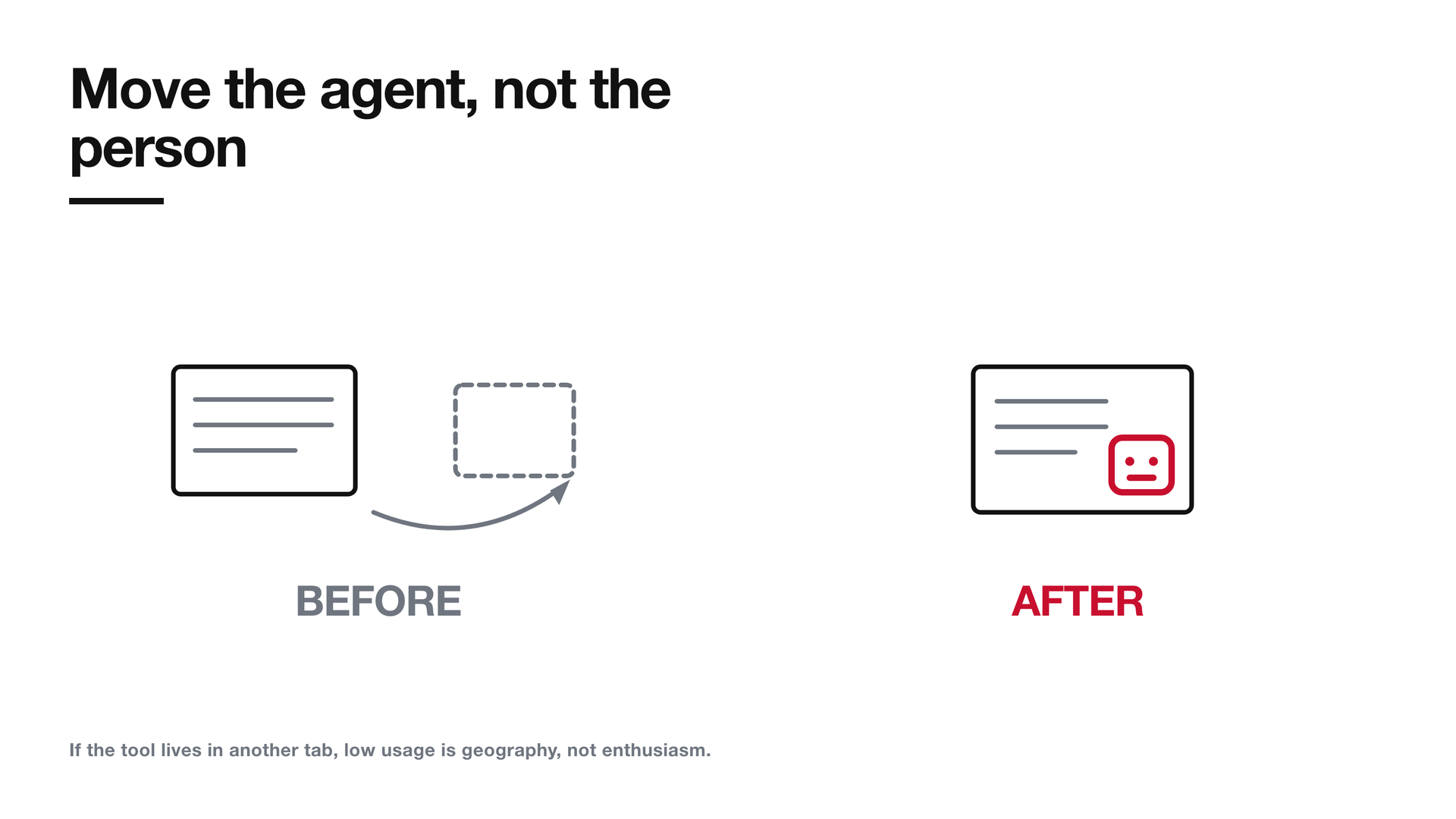
Bring the agent to the work, not the work to the agent
Picture someone in your organisation who is good at their job and indifferent to AI. A claims handler, a shipping coordinator, a tax preparer. They have a screen they know intimately, a queue, a rhythm.
Now add an AI assistant in a separate tab. To use it they must leave the screen where the work is, describe a situation they are already looking at, wait, read a reply, and carry the answer back by hand.
Most people try that twice and stop. Not because it is bad — because it is somewhere else.
OpenAI states the alternative directly, and this is the strategic heart of the announcement rather than the technical one:
"Instead of asking every team to move its work into a general-purpose coding assistant, you can bring the agent into software designed around the actual job."
And more pointedly:
"The most interesting opportunity is not to reproduce the Codex app with a different logo, but to build software that reflects how a specific person or team already works."
That inverts how most organisations have approached this. The last two years were spent moving people to where the AI lives. The next two will be spent moving the AI to where the work already happens.
The consequence for adoption is uncomfortable. If a tool lives in a different tab from the work, low usage is not a training problem or an enthusiasm problem. It is a geography problem, and no amount of internal comms fixes geography.
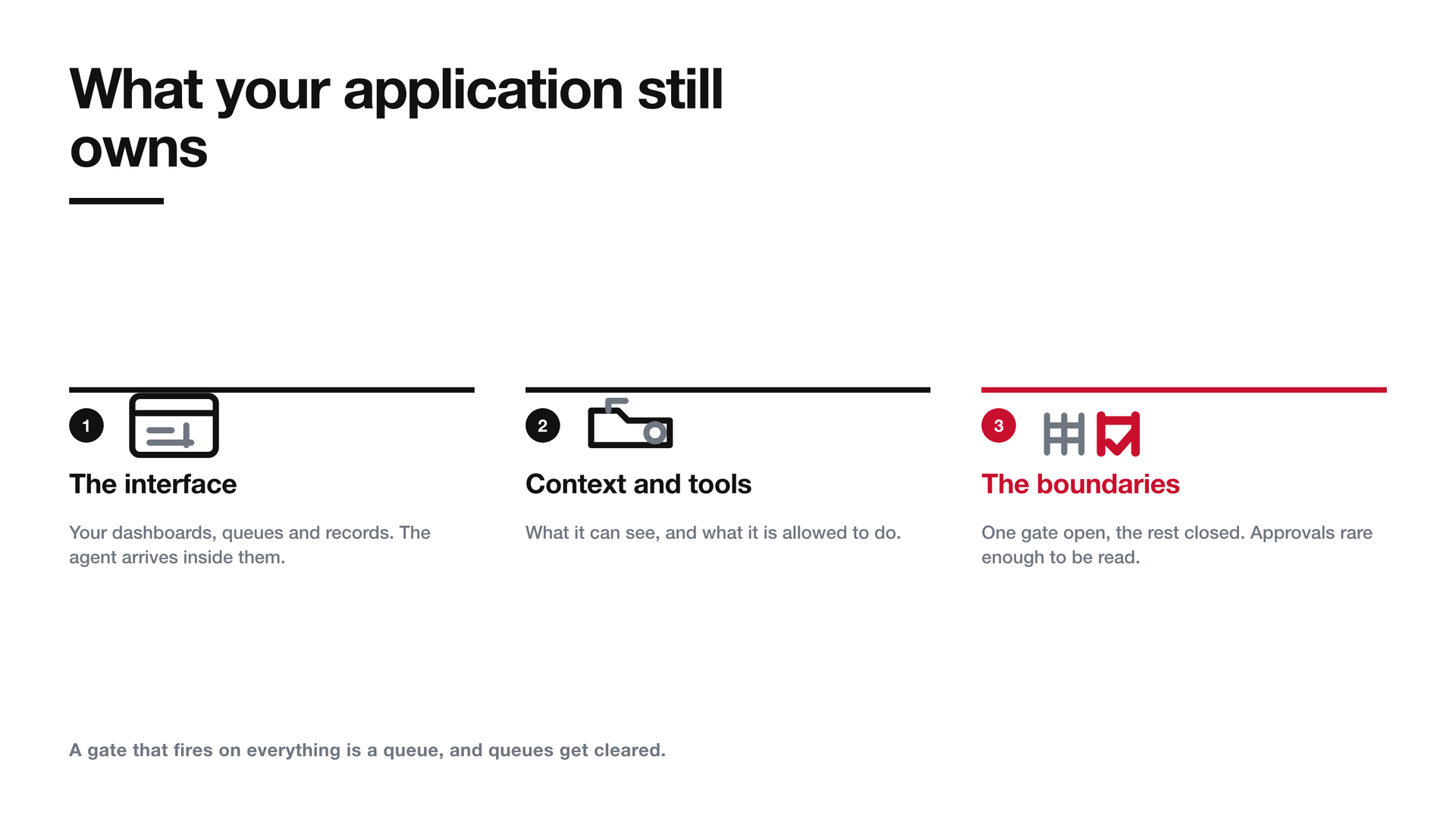
The three things your application still owns
Building on someone else's harness raises the obvious worry: what is left for you to control?
OpenAI sets out three things, and they read better as a checklist than as a feature list.
The interface. You keep your dashboards, queues, maps and records. The agent arrives inside them rather than replacing them with a text box.
Context and tools. Your application decides what the agent can see and do — which systems, which documents, which actions, including tools your own product owns and exposes.
Operational boundaries. Where the agent runs, which files it can touch, which actions need approval, how it is observed, and where results are written back.
That third one is where most governance goes wrong in practice. Approval gates are usually bolted on around an agent, so they fire on everything — and a gate that fires on everything trains the approver to clear it in batches without reading. When the boundary lives inside the loop, you can gate the one action that moves money and leave the other thirty-nine alone. Approvals become rare enough to be read.
It is not a coding story
The examples start where you would expect. GitHub and JetBrains bringing Codex into IDEs. Cisco using the SDK inside its own cloud product. Engineering tools, built by engineers, for engineers.
One is not like the others.
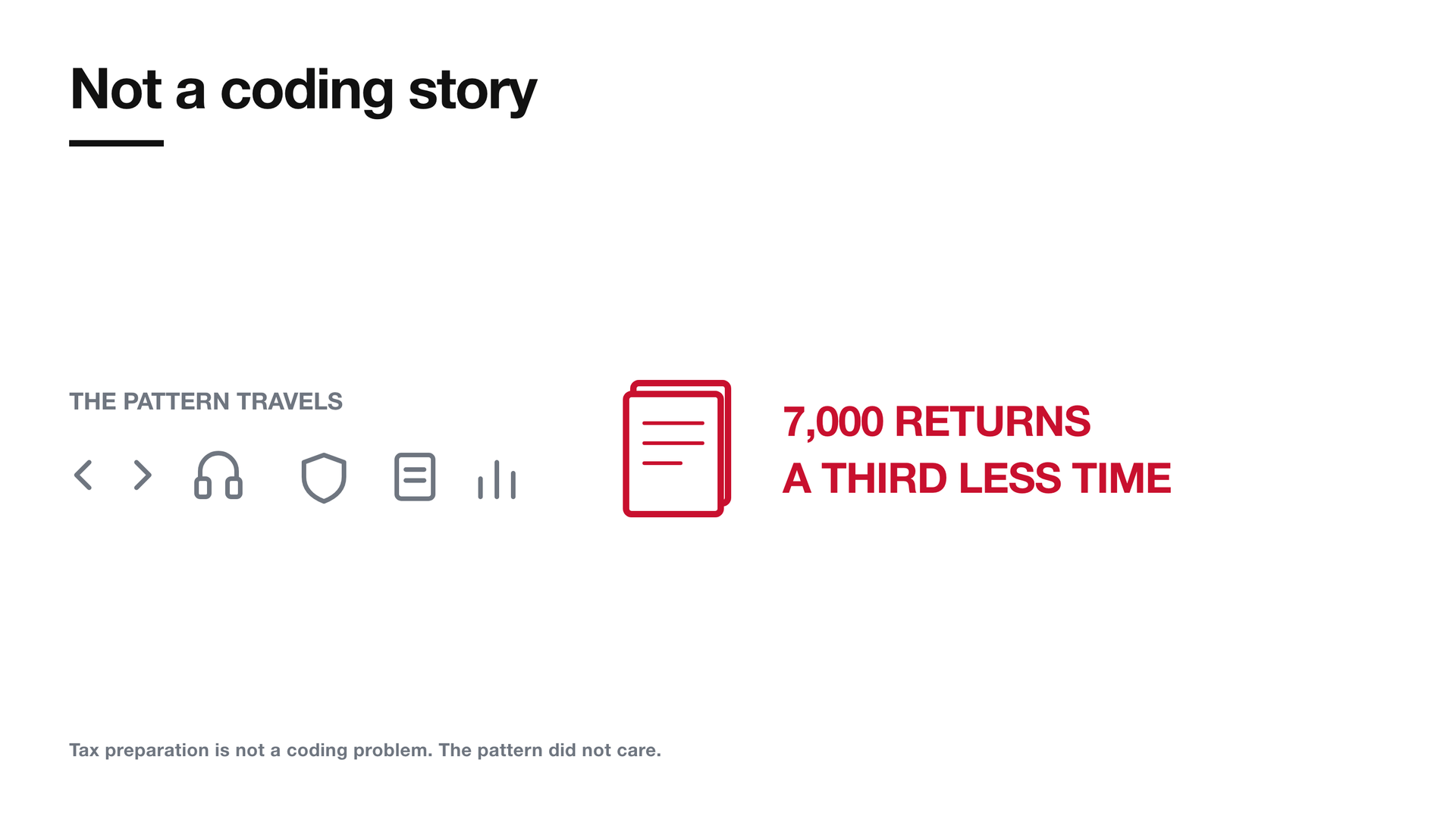
Thrive Holdings and Crete used Codex inside a tax preparation workflow with practitioner feedback built in. Their pilot processed 7,000 returns and cut preparation time by about a third.
Tax preparation is not a coding problem. It is document-heavy, rules-heavy, judgement-heavy professional work — the kind that exists in every accountancy firm, every insurer, every local authority and most law firms.
OpenAI say the pattern generalises, and list where: "support teams investigating customer issues, operations teams coordinating workflows, security teams triaging incidents, sales teams researching accounts, and marketing teams developing campaigns."
The shape is identical every time. The application supplies the context, the tools and the approvals. The harness runs the loop. Which means the hard part of one of these projects is not the AI at all. It is knowing the work well enough to say what context matters, which actions are permitted, and where a human has to stand.
The trap
The trap is treating this as an announcement about OpenAI.
It is an announcement about where the difficulty in this work has moved, and two competitors described it independently within three weeks. If you are choosing a model this quarter, the ARC-AGI number says the loop will move your result further than the model upgrade will — and most teams have that the wrong way round, expensively.
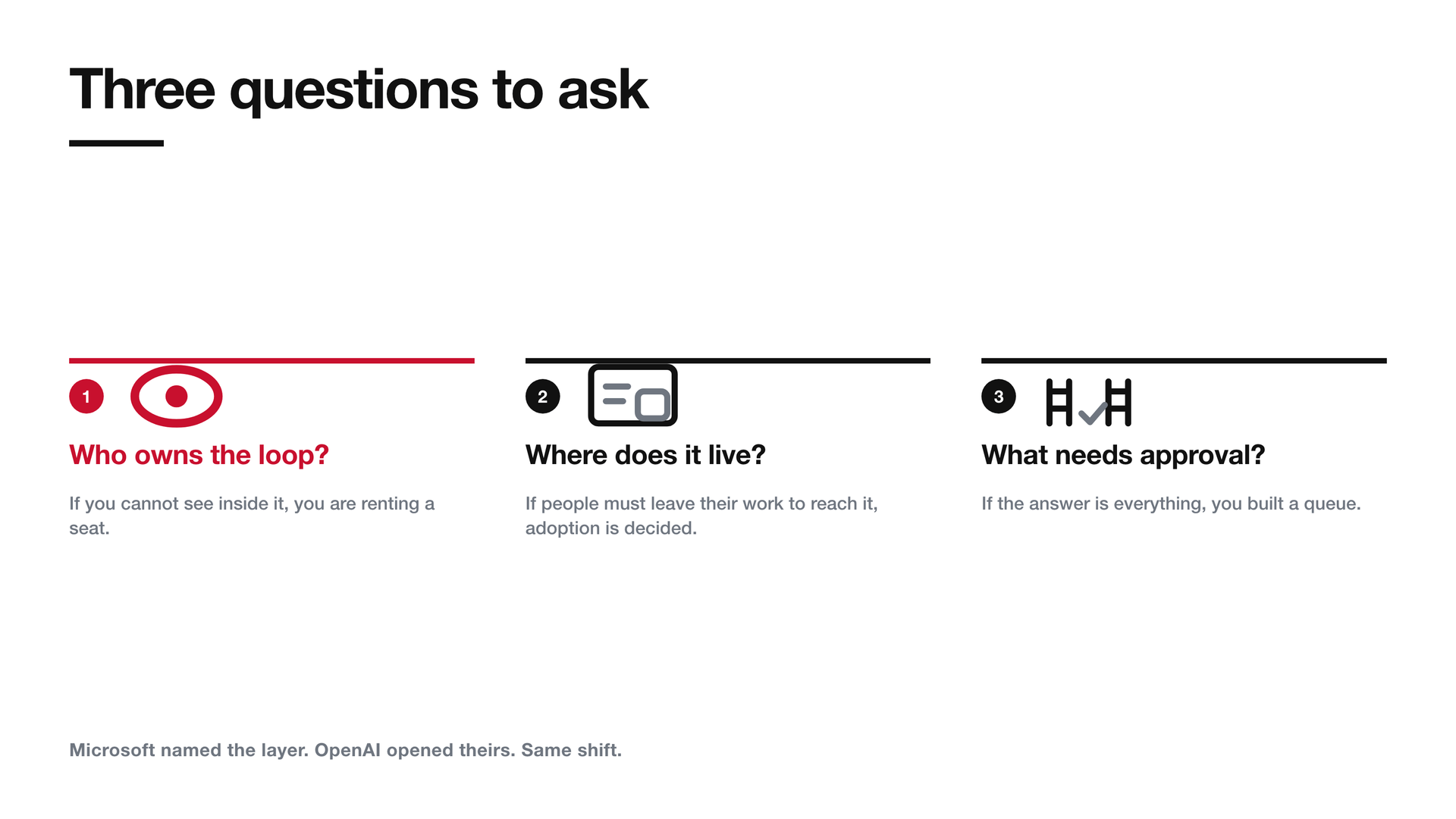
Three questions are worth carrying into any agent platform conversation from here.
Who owns the loop? If the answer is the vendor and you cannot see inside it, you are renting a seat rather than building on a platform.
Where does it live? If your users have to leave their work to reach it, adoption is already decided.
What has to be approved, and how often? If the answer is everything, you have built a queue rather than a control.
None of this requires an opinion about which company is ahead. Microsoft named the layer. OpenAI opened theirs. Both were pointing at the same shift — that the interesting engineering in AI has quietly moved out of the model and into the machinery around it.
The model was never the bottleneck. It just took two rival announcements, sixteen days apart, to say so out loud.
No comments yet — be the first to add to the discussion. Comments appear after they’re reviewed.
Want more insights?
Subscribe to get the latest articles delivered straight to your inbox.